
Personality is the combination of characteristics that form an individual’s distinctive character. Brand personality describes the way in which consumers perceive a brand in terms of human characteristics. It is also generally closely associated with a person’s self-perception and in the context of Dove, consumer’s self-image undergoes transformation by redefining the perception of one’s own beauty. Therefore, a key concept of brand personality is that consumers will choose brands that have a similar brand personality to their own (Solomon et al., 2019).
There are five main types of brand personalities with common traits:
- Excitement: carefree, spirited, and youthful
- Sincerity: kindness, thoughtfulness, and embodiment of family values
- Ruggedness: rough, tough, outdoorsy, and athletic
- Competence: successful, accomplished and influential
- Sophistication: elegant, prestigious, perhaps pretentious
Brands construct their brand personality based on the demographic of their target markets. The main reason marketers do this is because the more consumers feel they can relate and find similarities between their own personalities and the brand personality, the greater likelihood of brand loyalty. In the case of Dove and the concept of self, the brand promotes the idea of acceptance and worthiness, by others and by yourself.

“Self-congruity is the extent brand personality and self-concept are compatible. It is the match between the product’s value-expressive attributes and the audience’s self-concept. Self-concept influences consumer behavior in a way that results in the purchase of a product” (Johar & Sirgy, 1991, p. 24)
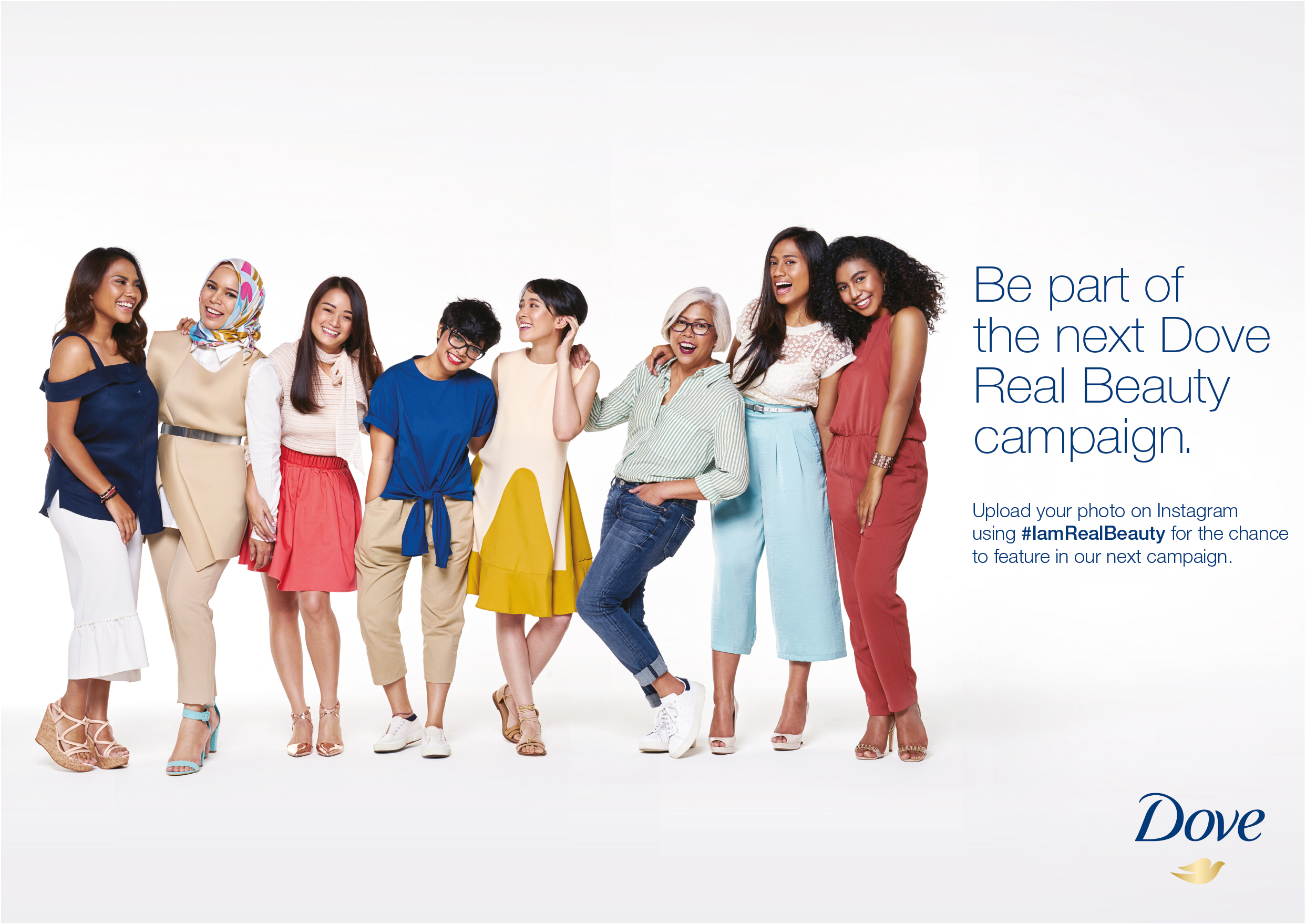
Dove’s brand personality revolves around self-acceptance, confidence, trust and care and therefore fits into the category of being a “sincerity” brand. This is immediately evident in their name and logo as the dove universally symbolizes innocence, gentleness and peace. In Dove’s campaign, the message involves transformation and redefining the perception of one’s beauty. The brand itself seeks to address itself to all women. The brand defines itself as wanting to unite women around the primary value of femininity thus introducing other very feminine values such as tolerance and accepting differences.
This strategy is a great way to differentiate from competitors as well as appeal to consumers who value “real” beauty. This kind of brand congruence encourages and increases brand loyalty. By using this disarming honesty approach, the target audience feels represented because Dove uses “real” people instead of celebrities. This strategy is even more deluding because it is representing itself as the real truth or reality despite the fact that models are still meticulously chosen, photographs are staged, and skin is clearer than average. Yet this campaign is more effectively assimilated into the social identities of its audience because it gives them an opportunity to project themselves into the ad and relate in a different way than competitors have.

The Dove “Real Beauty” advertising campaign is focused mainly on brand identity as opposed to product promotion. The awareness campaigns target the confidence and self-esteem of women and rather than push product promotions in order to differentiate themselves from their competitors, Dove created an entire social campaign. In doing so they have developed an utterly unique brand personality.
References:
https://www.investopedia.com/terms/b/brand-personality.asp
https://www.researchgate.net/figure/Dove-print-ads-for-Real-Beauty-Source-Unilever-2008_fig2_263373886
http://t.www.na-businesspress.com/JMDC/BockornyKM_Web8_3_.pdf
Solomon M.R, Russell-Bennett R & J Previte 2019, Consumer Behaviour: Buying, Having, Being, 4th edn, Pearson Australia, Melbourne








 Uni Blogging